Comparison and alternative pages: how SaaS teams win high-intent search
By BeeRanked · August 6, 2026 · Updated September 12, 2026
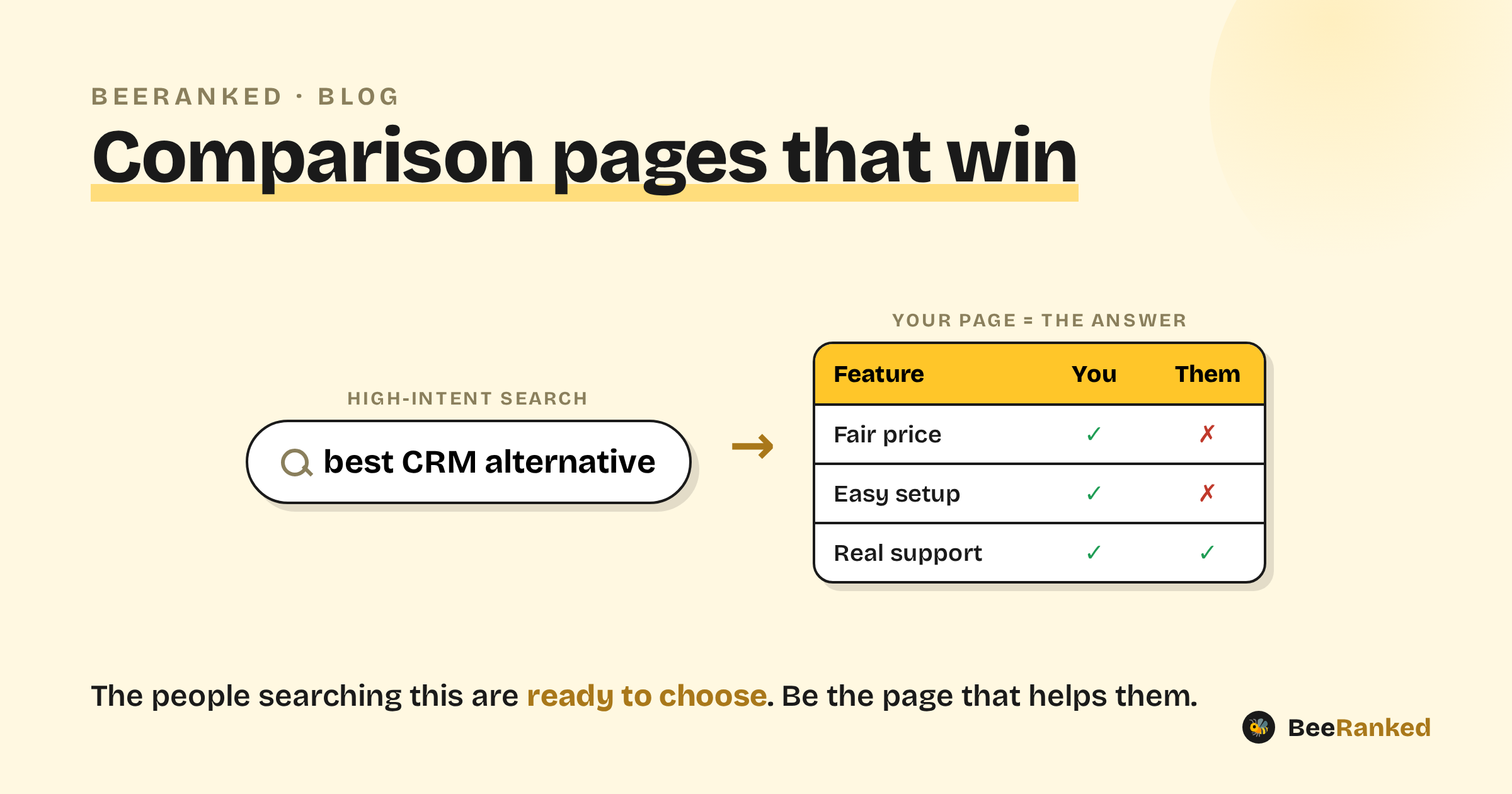
Most SaaS content aims at people who are still learning. The highest-value searches come from people who are almost done learning and are about to choose, and it is a search that often goes unanswered. Searches like "best CRM alternative," "Notion vs Coda," and "best help desk for small teams" come from someone with a credit card nearby. Comparison and alternative pages are how you show up for that moment.
Why these pages punch above their weight
A visitor searching "help desk software" might be months from buying. A visitor searching "Zendesk alternative" has already decided Zendesk is not it and is shopping right now. That is decision-stage intent, and it converts far better than top-of-funnel traffic, even though the search volume is smaller. You are trading reach for readiness, which is usually a good trade for a business.
The three pages worth building
"[Competitor] alternative", for people actively leaving or rejecting a specific tool.
"[You] vs [Competitor]", for people weighing two named options, often including you.
"Best [category] for [segment]", for people who trust a well-reasoned shortlist ("best project tool for agencies").
Make them fair
The instinct is to make yourself win every row. A page that does that reads as an ad.
Be accurate. State where the competitor is better. A comparison that admits a weakness is believable; one that wins everything is an ad, and readers (and AI answer engines) discount it.
Do not trash the competitor. Respectful and factual beats snarky. You are talking to someone who currently likes them.
Help the reader choose. Even when the right choice is sometimes a competitor. That is what earns the citation, and the trust that closes the readers who are a fit.
Fair, evidence-based comparisons are also what Google's guidance on helpful, people-first content rewards.
Structure them so they get quoted
These pages are perfect candidates for being the source an AI answer is built from, and for winning a featured snippet, because they answer a clear question with a clear structure:
Lead with a plain verdict a machine can lift in a sentence.
Use a real comparison table, and add structured data so you are eligible for rich results.
Write for Answer Engine Optimization: the AI answering "is X or Y better for agencies" is going to quote someone, so make it you.
The zero-click upside
Many of these searches now end without a click, because the answer shows up in an AI Overview or a snippet. If you are the source it is built from, you still won. In a world of zero-click search, being the comparison the answer quotes is the win, because your name is what the buyer walks away remembering.
Keep them alive
Comparison pages rot faster than most content, because competitors change pricing, features, and positioning. A stale comparison is worse than none: it is wrong in public. Put a review date on each one and revisit it on a schedule. Accuracy is the whole value.
Where to start
Pick your single most common "who else did you consider" answer from sales calls. Build that one comparison page well. Then work down the list. A handful of accurate decision-stage pages will out-earn a pile of top-of-funnel posts. If you are earlier than that, start with SEO for SaaS startups: your first 90 days.